
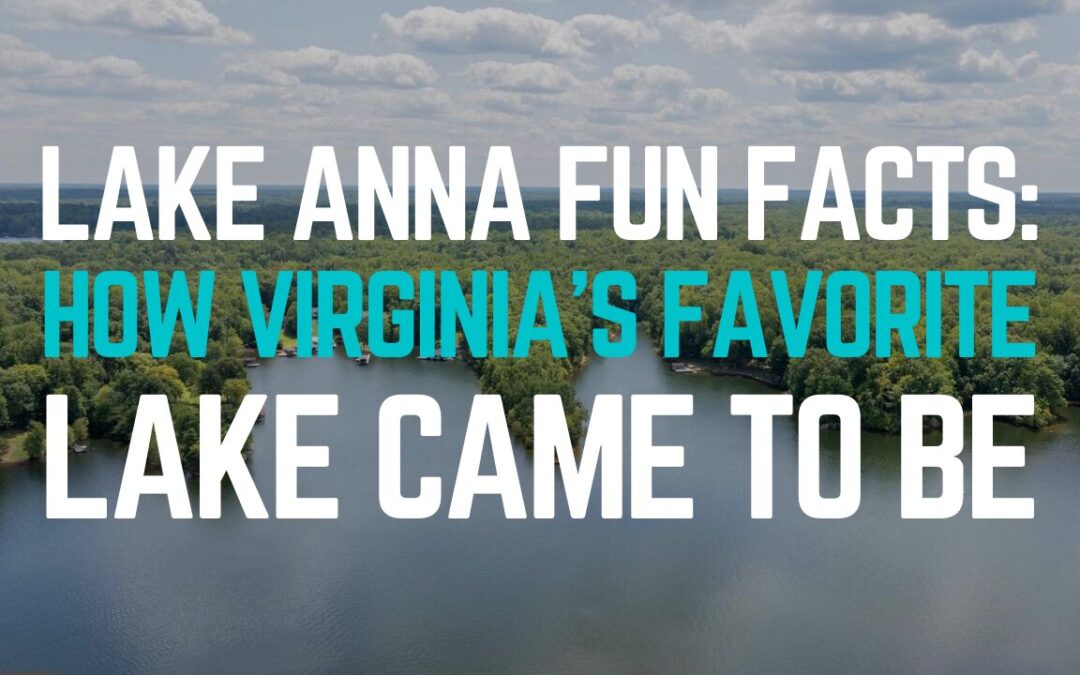
Lake Anna might be one of Virginia’s most popular destinations for boating, fishing, and waterfront living — but how much do you really know about the lake itself? From its size and history to the science behind its unique “hot side,” here are a few fascinating facts about Lake Anna that locals and newcomers alike love to learn.
How Big Is Lake Anna?
Lake Anna is one of the largest freshwater lakes in Virginia, stretching across 13,000 acres with more than 200 miles of shoreline. It spans three counties — Louisa, Spotsylvania, and Orange — and is divided into two sections: the public side (open for general recreation) and the private side, which is restricted to property owners and their guests.
The lake’s impressive size means there’s something for everyone — from quiet coves for kayaking to wide-open water perfect for wakeboarding and sailing.
Was Lake Anna Man-Made?
Yes — Lake Anna is a man-made reservoir, created in the early 1970s by Virginia Electric and Power Company (now Dominion Energy). The company built the lake to serve as a cooling source for its nearby nuclear power station, but it quickly became a beloved recreational and residential destination.
The damming of Pamunkey Creek, along with several smaller tributaries, formed what we now know as Lake Anna — a stunning blend of natural beauty and engineering.
When Was Lake Anna Built?
Construction on the North Anna Dam began in 1968, and the lake was fully filled by 1972. Since then, Lake Anna has evolved from a utility project into one of the most sought-after vacation and full-time living destinations in Central Virginia.
Fun fact: when it was being filled, it took nearly two years for the lake to reach its current level!
What’s the Deal with the “Hot Side”?
Locals often refer to Lake Anna’s private side as the “hot side.” Why? Because this section of the lake is used to circulate and cool water from the North Anna Nuclear Power Plant.
Don’t worry — the water is completely safe for recreation and is not radioactive. It’s simply warmer year-round, which means residents on that side often enjoy swimming and boating well into the fall (and even winter) months.
Lake Anna’s Connection to the Mineral Earthquake
In August 2011, a 5.8-magnitude earthquake struck near Mineral, Virginia — just a few miles from Lake Anna. It was one of the strongest earthquakes ever recorded on the East Coast and was felt across dozens of states.
Fortunately, there were no major injuries or structural damage to the dam or power plant. However, it did lead to a brief precautionary shutdown of the North Anna Nuclear Station. The quake became part of local history, and to this day, it’s one of the most-searched Lake Anna facts online.
A Modern Lake with a Timeless Appeal
Today, Lake Anna stands as a testament to how innovation and nature can coexist beautifully. What started as a power plant reservoir has become one of Virginia’s most vibrant communities — home to thriving neighborhoods, small businesses, and thousands of people who fell in love with lake life.
Whether you’re visiting for the weekend or thinking about calling Lake Anna home, this lake’s story is one of transformation, community, and natural beauty.
Want to learn more about life at Lake Anna?
Follow our “Lake Anna Fun Facts” series every other week for local insights, hidden history, and insider tips on living (and playing) at the lake.
Explore homes and community guides at theashleyhoffmangroup.com.